Personalisation is How a Customer Comes to Trust You
Chent Thambiah · 4 November 2026 · 8 min read
When someone hears from you for the first time, what tells them you actually looked at them?
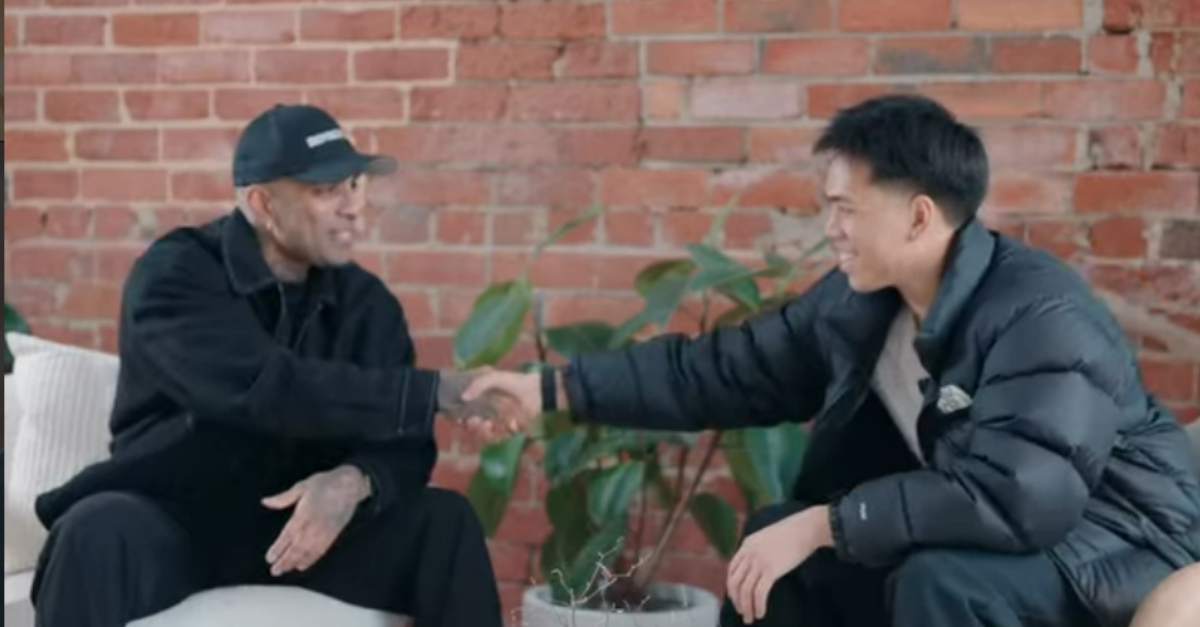
For me it's a message that starts from their situation. When I reach out to another founder, it goes something like this: I can see you're in Melbourne too, I've been building in this space for years, and I'd like to catch up for a coffee, because I think we've each got something the other could use. It names one specific thing I noticed, says what I bring, and makes the next step easy to say yes to. That's an exchange, not a pitch.
The message does three jobs before the conversation has started. It shows I looked. It shows what I bring. And it makes the person feel noticed instead of targeted. That's the customer experience, and it starts earlier than most businesses think.
It also gives the title a straight answer. Personalisation still differentiates, but not the version in your email platform. What sets a business apart is personalisation that proves you paid attention, because attention builds trust and being specifically right builds authority.
The two kinds of personalisation
Most businesses do one of these. The ones people trust do the other.
Surface personalisation puts facts about the customer into an experience that's the same for everyone underneath. The first name, the segment, the purchase history, the "recommended for you" row. The email, the sequence and the pitch are identical, and only the details change. It's cheap, AI tools do it in seconds, and customers have seen it a thousand times. Companies tend to rate it higher than customers do. In one widely cited comparison, 85% of companies said they provide personalised experiences while only 60% of customers agreed.
Depth personalisation lets the customer's situation decide the experience. Where they start, what they skip, what gets said and how it's said all follow from who they are and where they are, so two customers don't get the same thing. It takes judgement, and it takes someone who pays attention. It's the harder kind, and it's the kind customers feel.
There's a simple test. Take the customer's name off. If everything else would stay the same, it was surface. If the content would change, it was depth.
Where courses led me
I learned the difference by building the opposite. I used to create the perfect process: a clean sequence of modules, automated, with ads feeding it, that could have served a hundred people a month. It was good for the numbers. And it kept failing the person in front of me. Some people didn't need module one first, they needed module seven. Others didn't need module five, they needed module five said a different way. A fixed sequence can't know that, because it can't see where a person actually is.
That's cookie-cutter at its purest, and it's why I stopped doing courses. I'd rather explore and find what works for that person.
I'm not against them. Early in your development, do a couple. Get the frameworks, because they're a solid foundation. Then notice what they don't cover: the spin on this area or that, the part that's specific to you. That's the point to find someone who'll stay with you over a period of time and help you extract what you actually need. The course gives you the foundation, and the extraction is the depth.
The trade is real. Depth takes energy and doesn't scale like a clean process. What you get back is the transformation and, with it, the ability to charge more. Moving from cookie-cutter to personalised moves you into a different market, with people who want a result that fits them. It isn't right for every business. If your customers want fast and cheap, a standard version is the correct answer. The mistake is the middle: charging for attention you don't give.
How personalisation builds trust
People trust what shows evidence of attention. A name proves nothing, because software supplied it. What proves attention is something specific that couldn't have been written without looking.
In a mentoring session I open the person's account and we read it together: which posts are working, what's in their top three, who their audience is. I'm not offering generic advice. I'm working from their real material, and they can see I'm reading what's actually there, including the parts that don't need touching. No template fakes that.
The same applies to a first visit. I tell founders I coach to say why they're there and why them, then ask how long the business has been going, who their clients are, whether they're booked out. The goal is to make the person feel special, and it works because it's true. And expect them to check you out afterwards. People do their due diligence, and they'll scope you out online once you've left. The trust you built in the room either holds up on a second look or it doesn't.
How personalisation builds authority
Authority comes from being specifically right. When I sit with a founder and hear what they want to build, I can usually list a couple of things they already half-know about their own situation, and they say, "that's exactly it." Then comes the question underneath: do you think I can do it? Belief is only worth something when it's attached to direction, so I say yes and we work out which way to point.
Honesty carries as much weight. When I coach someone on how to introduce themselves, I tell them to say what they've found in their years in the industry, good and bad. Authority that only reports wins reads as a pitch. I do the same at my end of the table. I tell people to model the parts of my life that look like where they want to be, double down on those, and ignore my advice on the rest. It's the opposite of a mentor who wants a clone, and it's why people trust the parts they do take.
The rest of the experience
Most businesses personalise one moment. The experience that builds trust runs from before the first message to well after the conversation.
Before. I usually reach out on Instagram, because it's where I have the most to show. They can vet you. Personalised outreach only works if what they find backs it up.
During. I open by asking how their day's been before we dive into anything. Then I mirror and match, a habit from personal training. With someone quiet you can't bounce around like a game show host, because they'll shrink. With someone loud and fast, a flat delivery bores them. And sometimes the most personal thing is to say the hard part out loud. "This is hard." "Me too."
After. I send a recap. When someone's preparing for something, I run the call with them, record it, send it back and give a short brief beforehand. Follow-through is personalisation that shows up after the room has emptied, and most people skip it.
Where trust carries the price
Cain was already running a successful tattoo business. The work was good and the client list was there, but the business was built on client delivery, and he wanted to expand beyond it. He turned years of industry experience into a premium education and consulting offer, built a $15,000 education package and secured his first client within eight weeks. He's continuing to develop and grow the new business.
An education package is the same territory as a course, which makes the price the interesting part. At $15,000 the content alone can't be what the client is buying, because content is cheap and everywhere. What carries a price like that is depth: trust that this person has been where they want to go, and authority that he'll be specifically useful to them.
Signs your personalisation is surface-level
- It's data you collected, not attention you paid. Names, segments and purchase history.
- Your outreach could be sent to anyone. Take the name off and it reads the same.
- Everyone gets the same sequence. The only difference is how it's addressed.
- You pitch before you've asked anything.
- Nothing happens after the conversation. No recap, no next step.
- Your outreach doesn't hold up to a second look. Nothing online backs up what you said in person.
What I'd take from this
Personalisation hasn't stopped differentiating. The surface kind has. What builds trust is evidence that you looked, and what builds authority is being specifically right and honest about where you're not the model. Both show across the whole experience, from the first message to the follow-up.
A few questions are worth sitting with:
- What does my first message prove I noticed?
- If I took the customer's name off, what would change?
- Where do I start each customer, and who decides?
- What happens after a conversation ends?
- If they scoped me out afterwards, would what they found match what I said?
If you're not sure whether your customer experience builds trust or just matches everyone else's, let's have a chat. We'll go through how people first hear from you, what they experience in the conversation, and where it's worth going deeper. That's the work I do through OnePercent Consulting.