Selling The Vision Before It's Polished
Chent Thambiah · 28 October 2026 · 6 min read
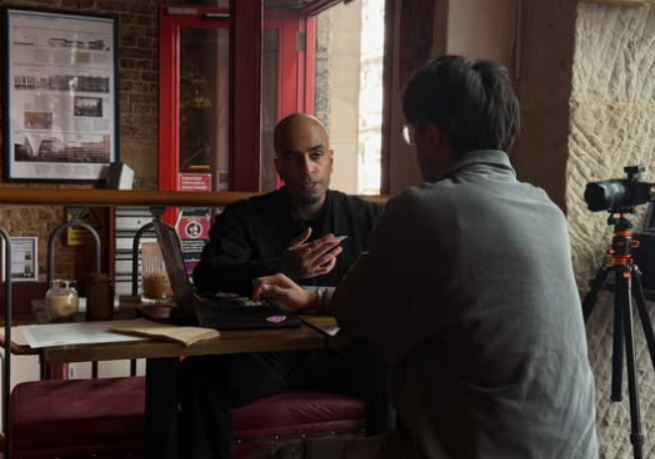
What Your Early Decisions Say About You
How do you sound confident about something you're still building?
A founder put that to me in a recent mentorship call. He was in the early stages of building a platform for health and movement practitioners, and he was about to start getting it in front of them. Some sections weren't built yet, some features were still coming, and he kept returning to what wasn't there. He wanted to know how to talk about the gaps without losing the room.
I told him he was asking the wrong question. Most people do want a finished product, but the ones who say yes at this stage aren't judging whether the platform is complete. They're reading his decisions: what he built first, what he left out, and how he talks about the gaps. Early on, those decisions are the product, and they show backers and clients what you're capable of.
If you're about to put something unfinished, or a business that's still growing, in front of your first customers, this is how I'd approach it.
When there's no finished product, people read you
When there's no finished product to judge, people judge you. A study of nearly four thousand Kickstarter projects found that later backers lean on early backers' decisions, and also size up the project and the entrepreneur for themselves. What you chose to build first, what you chose to leave for later, and how straight you are about the difference all get read.
That's where confidence comes from. Founders assume it comes from completeness, so they wait until there's less to apologise for. It comes from conviction, and conviction shows in your decisions. I've said before that if you're in business and you don't believe your product is the best you can make it, you've already lost. There will always be products that are better in some respect, but none of them is your version. Hold that without arrogance and you stop defending the gaps and start explaining the direction. The founder I was coaching didn't need a longer feature list. He needed to say what exists, say what's coming and why it matters, and stop there.
In practice, that comes down to three habits:
- Open with what exists. Lead with the real thing someone can look at today, not a list of what's missing.
- Name a gap once. "That's coming, and here's why it matters" is a complete answer. Over-explaining signals worry.
- Keep what's built and what's coming on separate lists. People will back something unfinished when they can see the direction and trust you. That trust ends the moment you describe something unbuilt as if it's live.
Your story opens the door
His platform had already generated a page for each practitioner from public information, so he could walk in and say: here's what I see, here's your page, it's already live and you just have to claim it. Nobody had to imagine a future. They could look at their own name on a real page, and a claimed page works as a landing page for them, with programs, written work and a proper bio if they want them.
It also helped that he was one of them. He runs his own rehab and performance business and has about ten years in the industry, so he wasn't a stranger selling to a room. He was a peer saying he was in this world too. That counts for a lot. In my experience, founder story adds credibility because people feel safer paying and waiting when they can see you faced the problem yourself. The research on how founders present themselves points the same way: when the identity you project fits what the project promises, people trust it more and back it more readily. Trust comes from fit, and you can't borrow it.
A story only amplifies a product, though. If what you've built doesn't solve a real problem, nobody's converted by how you got there. And as the price goes up, people tend to want someone other than you vouching for it.
Why failed products lack a real need
This is the question underneath his, and I think it matters more. When CB Insights went through about a hundred founder post-mortems, the top cause of failure was no market need, at 42%, ahead of running out of cash at 29%. It's a small sample, and the founders are diagnosing themselves, so I wouldn't lean on the exact numbers.
The pattern is what I'd take: the cash runs out after the real problem, which is that nobody needed the thing badly enough.
At the start, a product that will fail and one that will help people can look exactly alike, because both are unfinished. The difference is where the direction comes from. A product people benefit from is shaped by the people it's for. It starts from a problem somebody has, it gets in front of real users early, and what gets built next is what they keep asking for. A failing one is built from the founder's assumptions and polished in private.
You can see it in small decisions. A profile with a name and a website still doesn't tell you what a practitioner's clients experience, so you bring in proof like Google reviews. A platform with no content is worthless, and content with no platform is worthless, so early on you seed one to attract the other. And once a few practitioners have backed it, you ask them what they want next. If enough of them ask for the same thing, you build it. If they don't, you leave it.
Signs you're hiding behind polish
- You keep delaying conversations until the product is ready. There's always one more thing to fix first.
- You apologise for what's missing before anyone's asked.
- You describe features as if they're live. The line between built and coming has blurred.
- You can't say what one person would get today.
- Nobody outside your team has shaped the product.
What I'd take from this
Most people want a finished product, and the ones who back you early aren't most people. They're reading your decisions: what you build first, how straight you are about the gaps, and whether you're solving something real. Polish can't stand in for that.
Make the vision something they can look at. Keep what's built and what's coming apart. Let your story open the door and let the product earn the yes. Build what your first backers keep asking for and leave the rest. As you walk the path, the path appears, and you can only see it by walking.
A few questions are worth sitting with:
- What do my last three product decisions say about me to someone watching?
- What's the smallest real thing I can put in front of someone today?
- Who would feel the loss if this disappeared?
- Where am I describing something as built when it isn't?
- What are my first backers asking for that I keep putting off?
If you're sitting on something unfinished and putting off the conversation, let's have a chat. I'll help you work out what's worth showing now, what can wait, and how to talk about the gaps without apologising for them. Book a conversation.
Chent Thambiah is an entrepreneur, growth strategist and advisor based in Melbourne, Australia. He runs OnePercent XYZ, a mentorship and growth advisory business for founders and leadership teams.